Monday, February 10, 2014

Spiritual Gifts and the Early Church.


There is much discussion about the gifts of the Spirit that are active for the church today or whether some of the gifts have ceased with the Apostolic Fathers. Modern denominations are formed on the basis of this continuation of gifts. Revivals and massive gatherings center on the speaker being able to perform "miracle healings". How much of this should we accept as biblical and authoritative? Better yet, did the Early Church continue the practice of all of the spiritual gifts after the time of the Apostles?

 To explore this we first need to agree on our language. The "gifts" of the church are called "charismata" by Paul (although he will also call them "pneumatika"). This "charismata" is where we get the word charismatic. Today we are just as likely to use this word for a group speaking in special tongues or other miraculous manifestations or to describe the compelling personality of a person. The word "charismata" was used often by the Early Church but many scholars looking to defend their practice take every reference without searching for specific content. The Early Church used "charismata" to refer to God's gifts of material possession that were intended to be shared, the wisdom to be shared, and the help the strong could lend to the weak. Only once is a reference using "pneumatika"made in the Apostolic Fathers to refer to a spiritual gift (Epistle of Barnabas).

Here are some of the gifts that are associated with the modern pentecostal movement treated in light of the Early Church:

Apostles:

The Didache uses the word "apostle" to denote a missionary or an "appointed messenger". The document uses the words prophet, teacher, and apostle interchangeably for its instruction about testing them. The Early literature quickly began to use the singular expression of "apostle" to refer to Paul. Very early in the tradition the church began to hold the term to refer to activity located around the twelve. There is no suggestion of some succession from the Apostles themselves.

Prophecy:

This is impossible to treat in a paragraph without making sweeping statements so we will treat this in a later post specifically. However, here we can say that the early Christians saw prophets the same way they did in the Old Testament, they were a mouthpiece for God and proclaimed forth his "word". These proclamations were sometimes predictive in nature but were usually relevant observations based on the general revelation given of God's will to a specific situation. There was a sect of early Christians called the Montanists that were a prophetic movement following Montanus that came up around 172 AD in Phrygia. There is much made of the Montanist movement by pentecostal scholars. It is important to note that the "prophets" of the Montanist movement were predicting the return of Christ. They were repeatedly revealed to be false prophets when the return of Christ did not manifest. Even though Tertullian joined this Montanist movement in his later teaching, the sect was made distant from the Orthodox teaching of the early Christians. Again, we will return to this later.

Tongues:

Tongues as a spiritual gift were primarily a marker of the movement of the gospel into other nations and people groups. This word "glossolalia" has the potential of four meanings:

1. to speak a human language that one has not learned (Acts 2)
2. to speak a non-human language (1 Cor. 13:1)
3. to speak in unintelligible words that need interpretation
4. to utter sounds in musical cadence

Early references to speaking in tongues outside of the New Testament are extremely sparse. Irenaeus refers to the use of tongues as a move of the twelve and Paul in line with foreign languages, not at all like modern glossolalia. He also uses the term to refer to frivolous or silly speech as opposed to speech that is unintelligible. The lack of mention of the occurrence of speaking in tongues in the second century has been interpreted as being so common that it need not be mentioned. However, the controversy surrounding the Montanists provided the opportunity for it to be reflected on. The reason they were not mentioned could also be because they has ceased.

Tuesday, January 28, 2014

What was Early Christian Worship Like?

There are many discussions and disagreements on the form and formality of worship. There are traditional liturgical practices like the Greek Orthodox Liturgy that date back over a thousand years. There are also some that think their altar calls and "Gaither-style" hymns would qualify as "traditional. And then there are the contemporary services that lean primarily on music and drama to move the worshipper in to more willing acceptance of the topic for preaching. There are any combination or tweaking of any of these and most congregations would not hold firmly to any one of these approaches. However, the questions often arise, "What was worship like in the first church?"


The sources are not full enough to show exactly how the Apostles worshipped but there are early documents that give us a fairly clear picture of the kind of worship that was practiced in the earliest tradition. All of these practices were typical (as far as the sources point us) of the church in the first 300 years. So, what was worship like?

Worship was weekly

The earliest church gathered weekly for worship on Sunday. The day of the week was likely a celebration of the resurrection and a clear breaking from the Jewish practice of gathering on Saturday. The meeting also occurred pre-dawn and the sun would rise as the Lord's Supper was being shared. This would visibly and tangibly point the worshipper to the hope of resurrection that the elements were intended. This early meeting also allowed slaves and workmen to go to work (no weekends or stores being closed for these guys) and avoid unwanted detection from those aggressive to Christians.

Worship was Christ-centered

The earliest church celebrated Christ as divine from a very early point in history. Theories of this development taking decades are faulty, at best. The worship of the early church would focus on hymns that proclaimed Christ's deity. These were both encouraging and instructive. These hymns would be responsive statements coming from the congregation based on the statements made by the leader. These early hymns are basically confessions of faith in their infancy.

Worship was ordered

The earliest elements of the worship service were based on the pattern displayed in the synagogue. They were "word centered" in that the proclamation was the main event. All other elements were to encourage and illuminate the exposition of the Scriptures. The basic elements were Scripture reading, preaching, singing, praying, partaking in the Lord's Supper, and giving. The two basic movements were the service of the word and the service of the table. Throughout time these would be called by different terms but the overwhelming portion of Christian worship throughout history included both Word and Table. The Table has been treated here before and will be again so I will only point out that preaching was primarily expository. This means that there was a reading and explanation of what was being read.
A final note is on the giving, which will be treated more fully later. The concept of tithing is not in the early church worship practice. The tithe was suspended at the close of the Old Testament (which comes at the cross). The early church encouraged giving for the main purpose of caring for others.

What should go…What should stay?

Based on these insights from historical Christian worship it is clear that there is a great deal of support for our worship practices today and a need to make some major changes. A few include…

1. Make worship about Jesus: This is not to say that we abandon the Old Testament or any texts that are not explicitly speaking about Jesus. In fact, the early church was deeply committed to proclamation from both testaments. Rather, we could ask "What does this text proclaim about the need or nature of Jesus Christ?"

2. Make worship moving: Using the setting, scenes, and elements of worship to tell the Christian story are instructive and inspiring. The first church used meals, the rising sun, and other elements of worship to set a "mood" and display direct encouragement into everyday life.

3. Preach and Practice the Table: Churches that are not preaching expository (as opposed to topically) and are not calling worshippers to the Table weekly should have to prove (historically) why they have clearly broken with the apostolic tradition. To worship without the table is to do something other than Christian worship.

Thursday, December 5, 2013

Communion Confession...

Adapted from the Didache (AD 50-150)


Leader: “The Lord Jesus on the night when he was betrayed took bread, and when he had given thanks, he broke it, and said, ‘This is my body which is broken for you. Do this in remembrance of me.’”


Response to the Bread:
         Everyone:         We give thanks to you, our Father,
                           for the one bread, which you have made known to us.
                           Through Jesus, your servant, to you be glory forever.

Leader: “In the same way also he took the cup, after supper, saying, ‘This cup is the new covenant in my blood. Do this, as often as you drink it, in remembrance of me.’”  

Response to the Cup:
         Everyone:         We give thanks to you, our, Father,
                           for the cup of blessing, which you have made known to us
                           Through Jesus, your servant, to be glory for ever.

Leader: “For as often as you eat this bread and drink this cup, you proclaim the Lord’s death until he comes.’”

Sharing of the Elements:
Everyone:         Even as this broken bread was scattered over the hills, and was gathered together and became one, so let your church be gathered together from the ends of the earth into your kingdom. To You is the glory and the power through Jesus Christ forever.


* image is of the agape feast, an ancient Christian tradition carried on today as communion.

Tuesday, November 26, 2013

Wake up Your Faith...

One of the concerns facing the current condition of the Church is a lack of connectivity with other believers. We huddle into autonomous church buildings or disconnected denominations and close off our communication from other Christians. We also insulate ourselves from those outside our circles and we suffer relationally, as well as intellectually. The truth is that there is much to be learned and gained from our Christian brothers and sisters, both now and throughout history.


This is one of the many reasons that I am thankful for books like “Awakening Faith” by James Stuart Bell. This book is a gold mine of wonderful devotions from the Early Church period. Each page is a window into the faith that has stood for millennia. The Christian reading these daily offerings will be blessed, encouraged, and educated by those that have been so critical in establishing the foundations of the church.

The reader will find these devotions to contain enough of an excerpt to get the mind and heart moving but not so much that the focus is on the book. Topics are included, as well as biblical references to encourage some more thought on the topic being discussed by the Church Father. This is a book that will be one of you favorite devotions to have by you in the morning.

The only areas of criticism are that the writings being used in the devotion are not referenced. The reader cannot go and read more by this particular writer. I would hope to see this addressed in a second edition. I would also hope to see better indexing. There is some in the back but I felt that having a few paths through the devotional would have been nice (and simple enough). To move through the devotional by topic, by author, and chronologically would have been a vast improvement to the indexing of the devotions.

That being said, this book is well worth your time and money. You will be using it for years to come. If you are looking for a devotional that breaks out of the typical mold then you will want to consider “Awakening Faith”.


Zondervan provided me a copy of this book for a fair and honest review. This was not an effect on the review that I have written.

Monday, October 21, 2013

A Prodigal People...


One of the most neglected areas in all of Christian teaching is the writings that surround the Babylonian captivity. There are some real gems that are dug out and often made aware to us in Daniel (a couple of stories) and Esther but the majority is left alone. The real shame is that this collective story and the encouragement that is found within are so very relevant to a post-everything culture.

Gerald Bilkes has made a portion of this important narrative available to us through his work Memoirs of the Way Home: Ezra and Nehemiah as a Call to Conversion. Bilkes uses the parable of the prodigal son to frame his approach to reading the return narratives of Ezra and Nehemiah.


Bilkes is successful in making these often-neglected narratives relevant to a New Testament audience by synthesizing the call of the Father to a wayward sinner with the call home to the Jews from captivity.  Bilkes has a healthy and robust understanding of salvation and the resting of the initiation of the Gospel call solely on the work of God. However, he does not give sufficient reasoning on the biblical basis for his approach. The reader will need to accept a robustly reformed view of salvation in order to accept the thesis for this book.

Overall, this book is a quick read and a great introduction to the narrative of the return from exile. This is an area of critique, as well, since there could be much more said in this treatment of two books of the Bible in less than 200 pages. If you are looking for a robust and deep dig into the mines of God’s truth then you better look elsewhere. This is more of a site-seeing tour. 

I was provided a copy of this book for the purposes of an honest review.  

Monday, September 9, 2013

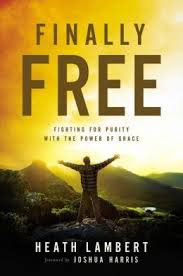
God's Grace in Porn Addiction


Pornography takes its toll on men and women all over the world everyday. Its effects can be seen in broken families, distorted self-images, and warped senses of self-satisfaction.  Pornography has all of the promises of sin and all of the destruction. It is the promise of satisfaction that ultimately leaves the user and its actors completely unsatisfied. This epidemic has not avoided the church or the pastors that serve her. It seems everyone has been swept up into the web of this vicious lover and she does not let go easily. There is hope…

Heath Lambert has written a book that points readers to this hope in Finally Free: Fighting for Purity with the Power of Grace. Lambert takes a bare knuckles approach to the fight against pornography in a way that also extends grace and mercy to the users and their families. In fact, the very center of Lambert’s approach is the grace of God that has been made known through Jesus Christ. From this center of God’s grace the fight is taken to the sin of self-satisfaction through pornography.


Lambert argues for eight areas where this sin must be attacked. He explains that sorrow, accountability, radial measures, confession, your spouse (or singleness), humility, gratitude, and a focus on the pure worth of Jesus Christ will allow you and your family to be finally free from the ravages of porn addiction.

If you are looking for someone to excuse the sin or to explain away the behavior by focusing on why so many are effected by porn then you need to look elsewhere. Lambert takes a hard line against the temptation of porn and explores the solutions with the basic premise that you have the power and means made available through God’s grace to be free from this sin.

Lambert’s work could have spent some time on giving a background and understanding on why we are seeing this addiction reach epidemic numbers. He could have shown the effects that involvement in this industry takes on daughters, sisters, wives, and mothers as the utter lack of recognition of God’s image as present in women. He opted for a very simple and straightforward punch in the face of pornography addiction.

When you or someone in your family is ready to get serious about a fight against pornography or if you are engaged in helping someone become free from this addiction then I highly recommend that you read this book.

* The publisher provided me a free copy of this book for purposes of review. I was not asked for a positive review.

Thursday, August 1, 2013

Early Christian Confession

"Whom no senses can reveal
    was made for us manifest;
  Who no ache or pain can feel
    was for us by pain oppress;
  Willing all things to endure,
    Our salvation for procure."
               ~Ignatius to Polycarp

5 Marks of a Holy Church

Holiness is a strange word for us today. We get visions of being “holier than thou” or risk presenting ourselves as “per...